
Food Waste Legislation
Clearly Explained.
Every sector has different food waste pressures. Bokashi Bran gives
hotels, restaurants, hospitals, schools, venues and multi-site groups
a simple, measurable system for food waste compliance, collection,
reporting and composting.
NEMA-aligned guidance
We translate South Africa's environmental laws into practical steps you can act on.
2027 landfill ban clarity
Understand what must change. When and how to stay compliant.
Practical compliance next steps
Clear actions and solutions that help you reduce risk and protect y our business.
2. The Waste Act
National Environmental Management:
Waste Act No 59 of 2008
The Waste Act places legal obligations on every holder of waste. It’s your responsibility to manage waste properly from start to finish.

Responsibility
You are responsible for your waste from origin to lawful disposal

Storage
Store waste safely and in a way that prevents environmental harm.

Transport
Use registered transporters and approved routes where required.

Lawful disposal
Dispose of waste at a permitted facility or through approved treatement.

Record-keeping
Keep records and evidence of your waste management and disposal.
3. The 2027 deadline
National Norms and Standards GRN 636
The Waste Act places legal obligations on every holder of waste. It’s your responsibility to manage waste properly from start to finish.

Section 5 table shown clearly
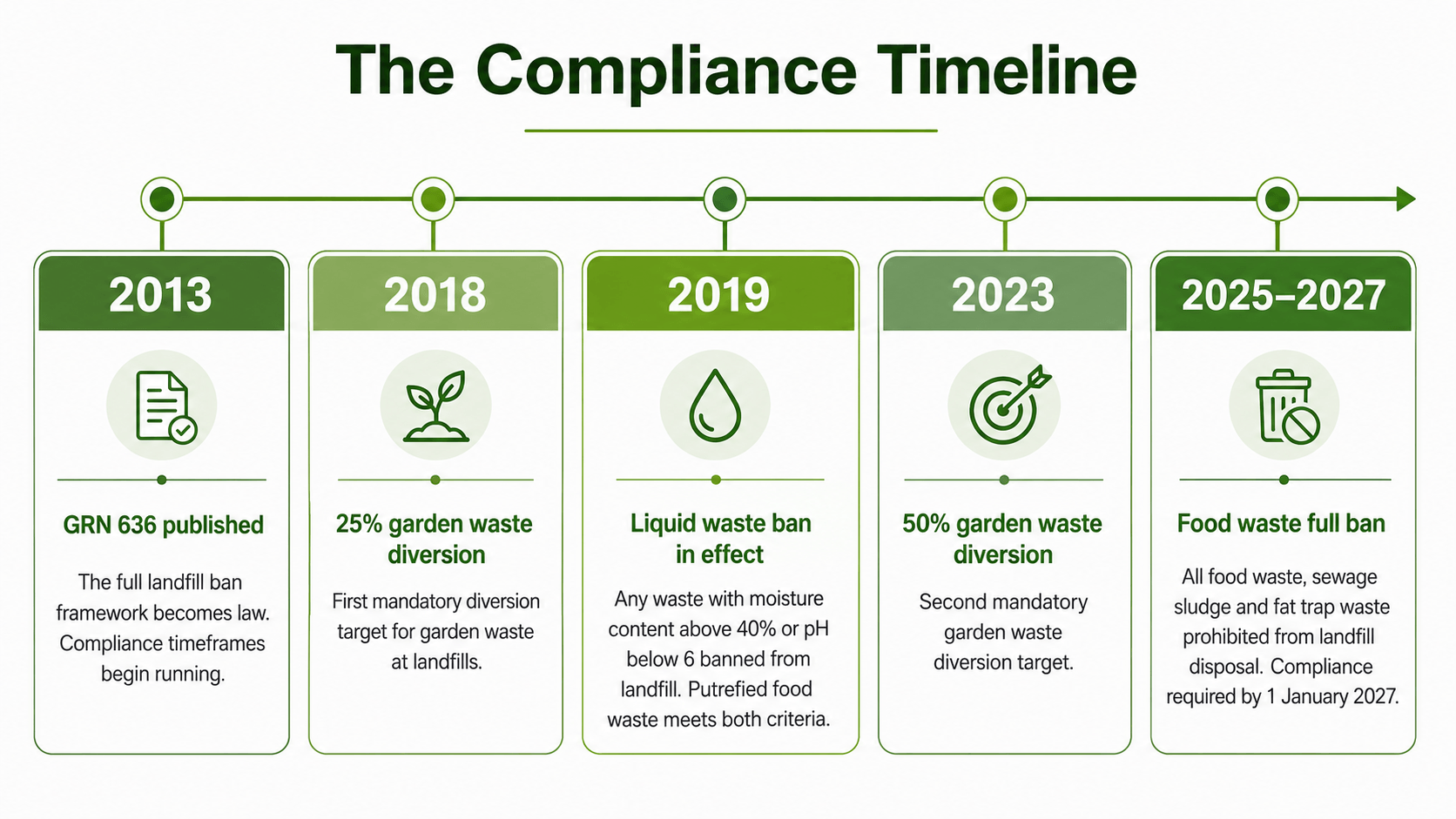
The Norms and Standards (GRN 636) Section 5 table sets the disposal prohibition time frames for different waste streams. The final milestone is 2027 for food waste - meaning it may no longer be disposed of to landfill, anywhere in South Africa.
4. Extended Producer Responsibility
EPR makes producers of packaging responsible for the end-of-life management of their products. In practice, this affects the packaging you buy and the waste you generate.

Compostable
Designed to break down in composting conditions. Often acceptable in organics streams with proof.

Biodegradable
Breaks down over time, but not necessarily in composting conditions. Not always accepted.

Packaging responsibility
Producers must fund or manage end-of-life systems. Choose materials wisely and keep evidence.

Choose the right materials, keep supplier declarations, and be ready to show how you manage packaging waste.
5. City of Cape Town IWM plan requirement
Notice from City Manager
The city of Cape Town requires certain businesses and institutions to have an approved Integrated Waste Management (IWM) Plan.
- Applies across the Western Cape.
- Required for designated premises and waste generators.
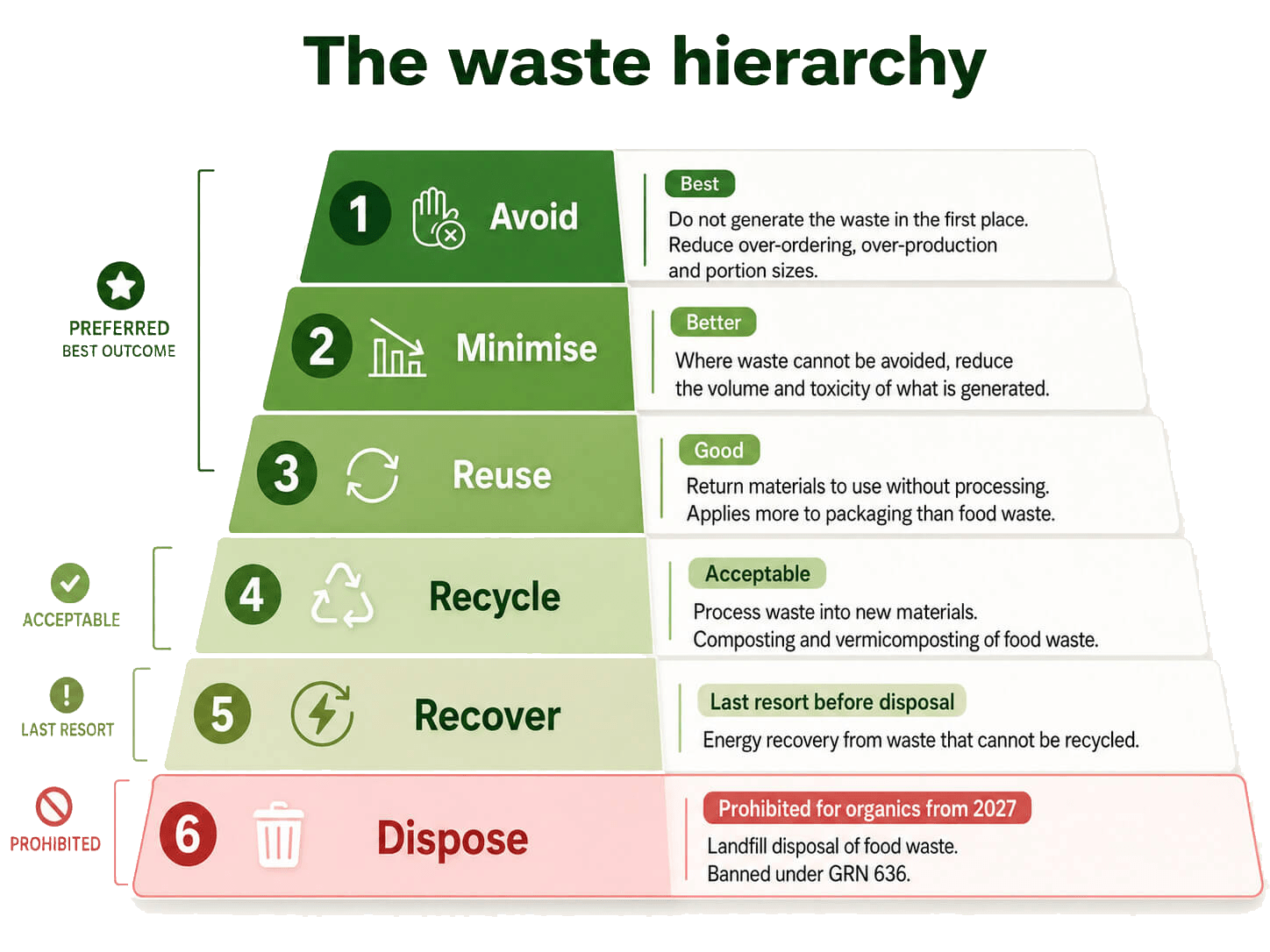
- Plan must show how you will avoid, reduce, reuse, recycle and treat waste.
- Non-compliance can result in fines, penalties or operational restrictions.
Act Now. Get your IWM Plan in place and keep your licence to operate.
6. What this means for your business

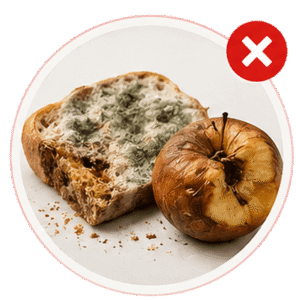
If you're still landfilling food waste, your're already non-compliant.
Putrefied food waste has a pH of 4 - already banned from landfill since 2019 under the liquid waste regulations.
Don’t wait for an enforcement notice.
Get ahead of the 2027 landfill ban and protect your business, your reputation and our environment.